

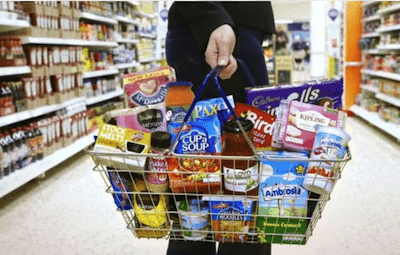
A recent study by "Which" reports that supermarkets increase prices to create the perception of discounts for customers who use loyalty cards.

(Image Source)
GLOA recent report by Which suggests that supermarkets like Tesco and Sainsbury’s may be raising their ‘standard’ prices in order to create an impression of discounts for customers enrolled in their loyalty schemes.
The consumer advocacy group, Which, conducted an analysis of 141 Clubcard and Nectar card prices at Tesco and Sainsbury’s, tracing their pricing history over the past six months.
According to Which’s investigation, Sainsbury’s promoted a 200g jar of Nescafe Gold Blend Instant Coffee for £6 with a Nectar card, presenting a saving of £2.10 compared to the regular price of £8.10. However, Which claimed that the regular price had been £6 at Sainsbury’s until it was raised to £8.10 just two days before the Nectar discount was introduced.
In a separate examination at Tesco, Which discovered that Heinz Salad Cream (605g) had a Clubcard price of £3.50 and a standard price of £3.90, although its regular price had remained at £2.99 for several weeks before being increased to £3.90.
The ‘Big Four’ supermarket chains have faced increasing pressure during the cost of living crisis to maintain low prices for consumers, with all major supermarkets implementing price reductions on various products.
Earlier this year, supermarket executives were also summoned to testify in parliament regarding whether they had exploited inflation by raising grocery prices.
Sue Davies, Head of Food Policy at Which, stated, “Which is urging supermarkets to ensure that their loyalty card pricing does not mislead, and for regulators to closely examine this growing trend of dual pricing.”
While the company has not officially lodged a complaint with the Competition and Markets Authority (CMA), it has shared its research findings with the authority.
A CMA spokesperson stated, “Grocery prices are a significant concern for people across the country, and shoppers need assistance in identifying the best value for their money. That’s why the CMA has an ongoing program of work in the grocery sector, including investigations into unit pricing practices both online and in-store.”
“We will assess the information provided by Which regarding its recent investigation into loyalty prices.”
A spokesperson for Tesco responded, saying, “We understand that offering low prices on the products we sell is crucial to our customers right now. That’s why we have over 8,000 weekly deals on Clubcard Prices, providing potential savings of up to £351 a year for customers while allowing them to collect Clubcard points that can be used for groceries and fuel, or doubled in value with our Reward Partners.”
“All our Clubcard Price promotions adhere to strict rules, including comparisons with market prices, to ensure they genuinely offer value and savings for our Clubcard members. These rules have been endorsed by our Trading Standards Primary Authority.”
“As recently reported by Which?, when a Clubcard is used, Tesco was the most affordable among all major supermarkets and was highly competitive compared to limited-range discount stores.”
A spokesperson for Sainsbury’s responded, saying, “Nectar Prices provide our customers with the opportunity to make real savings on 5,000 products. Which? fails to acknowledge that base prices have been rising throughout the year due to inflation. Our promotional guidelines for Nectar Prices are based on guidance from Trading Standards.”
“The Nescafe Gold example highlights a flaw in Which?’s methodology, as the claim that the ‘regular’ price was £6 is incorrect. The base price of this item has been £8.10 since December 2022, and £6 was a promotional price throughout this year, including during the launch of Nectar Prices in April.”
