
Ad-Panel
Join GLO today for largest global network of loyalty & CX professionals and latest loyalty research & analysis.
Home » Articles » Michael Rousseau, Air Canada CEO, extended interview on key goals, challenges and strategy

Michael Rousseau, Air Canada CEO, extended interview on key goals, challenges and strategy

by GLO
0 comments

Michael Rousseau, Air Canada CEO, gave extended interview on key goals, challenges and strategy to Aviation weekly. GLO provides the key takeaways.

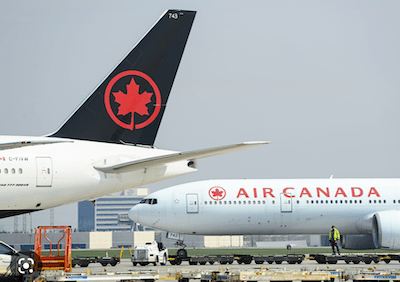
Air Canada

(Image Source)

Air Canada

Michael Rousseau, Air Canada CEO, gave extended interview on key goals, challenges and strategy to Aviation week. 

GLO provides the key takeaways: 

  • the changes affecting both the nation and the airline industry include the fact that Canada, once seen as having a largely homogeneous population, has evolved, with one in four Canadians now being immigrants. The fastest-growing group is South Asians, with a significant increase in Indian immigration over the past decade, surpassing the Chinese as the second-largest minority population. Air Canada has witnessed explosive growth in international capacity to South Asia (43%) and the Middle East (33%) since 2019. Examples of this expansion include new nonstop services from the Vancouver hub to Singapore and Dubai.
  • Air Canada’s Indian presence faces challenges due to the loss of overflying rights over Russia, which has led to the suspension of its Vancouver-New Delhi route and longer, costlier routes from Toronto. This has created an opportunity for a resurgent Air India, although Rousseau views it as a positive addition to the Star Alliance network.
  • Air Canada has become one of the most heavily partnered airlines globally. “When I came along into the alliance world in 2011, we had 19 partners. Now we have close to 40 in our portfolio,” managing director-international network and partnerships Mary-Jane Lorette said. This mindset to go beyond the Star Alliance and its Lufthansa immunized joint venture (JV) has been critical in securing links to South Asia, the Middle East and the Indian subcontinent through a partnership with Emirates Airlines. According to Rousseau, this partnership has been mutually beneficial, with Air Canada facilitating Emirates’ customer movement in Canada while gaining access to numerous markets in India.
  • Air Canada’s significant growth in international markets has driven nearly 70% of the year-over-year increase in passenger revenues, as reported in the company’s 2023 second-quarter earnings report. The airline also achieved an operating margin of 14.8% and a profit of C$802 million ($589 million), compared to an operating loss of C$253 million in the same quarter in 2022, with revenue increasing by 36% to C$5.43 billion.

  • While international destinations have decreased from 134 in August 2019 to 109 in August 2023, mainly due to the low-cost leisure subsidiary Rouge discontinuing Boeing 767 service, Air Canada has been actively announcing and launching 48 new routes in the past two years. Some of these new markets, such as Vancouver-Bangkok and Dubai, aim to diversify and counterbalance the typical seasonal patterns affecting Canadian airlines. Furthermore, the peak summer season is expanding, allowing Air Canada to take advantage of increased frequency and extended schedules.

  • Air Canada is increasingly focusing on sixth freedom flying, leveraging its strategic location to capture international traffic, especially from the active U.S. travel market. This has led to expansion into secondary markets like Salt Lake City, Utah, and Orange County, California. Air Canada’s joint venture with United Airlines holds a combined 58% share of seats, as per August 2023 data, with competitor WestJet’s low-cost carrier (LCC) arm, WestJet Encore, at a distant 14.5%.

  • As Air Canada fortifies its transborder position, it faces competition from new Canadian LCC entrants in an oversaturated domestic market. Two newcomers, Lynx Air and Canadian Jetlines, have joined the fray since 2019, while Flair Airlines has solidified its position as a leading domestic LCC. The market share of Canada’s four primary domestic discount carriers has increased from 4% in 2019 to 21% in 2023.

  • Air Canada’s most prominent competition in the premium travel segment is Porter Airlines, based in Toronto, which operates new Embraer E2 jets and challenges Air Canada on transcontinental routes and key Florida markets, especially during the weak first quarter. Air Canada acknowledges the potential impact of these developments on its economics, especially given the competition from LCCs and Porter’s expansion plans. Domestic yields are not as robust as international yields, prompting Air Canada to monitor the situation closely and remain competitive in the Canadian market.

  • Canada’s airports are known for their high costs, with fees for airport improvements and federal government security fees significantly higher than those in the United States. Rousseau identifies airport infrastructure as a critical bottleneck. Unlike airports in other parts of the world, Canadian airports follow a user-pay model and have accumulated significant debt during the pandemic due to a lack of passengers. Air Canada considers infrastructure improvements at Canadian airports an urgent matter of national economic importance, given the airline’s substantial contribution to Canada’s GDP and job market. The airline generates 2% of Canada’s GDP and employs 37,000 people, with a typical ratio of four additional jobs for each one it provides. Improving airport infrastructure is crucial for the airline’s growth prospects in the coming years.

  • Air Canada has experienced challenges in ramping up operations after the pandemic, with a steeper increase compared to the U.S. ramp-up. This has put pressure on the entire aviation ecosystem, affecting on-time performance (OTP). While OTP has ranked lower than some competitors, Rousseau emphasizes the balance between on-time performance and maximizing asset utilization and revenue efficiency.

  • One of Air Canada’s valuable assets is its Aeroplan loyalty program, which it repurchased from Aimia five years ago for $330mn. Rousseau highlights the program’s success and value to customers, indicating that it is setting records and providing a competitive edge and have added “a whole bunch of benefits and partnerships to make it much more valuable to customers”. While in the US, loyalty programs are huge, high-margin billion-dollar profit drivers, in Canada due to slightly lower merchant commission rates they result in a different market and model. Air Canada doesn’t break out revenue and membership numbers but says the retooled program is setting records and provides a true edge that the competition can’t match.

  • Air Canada is also the only international network carrier in North America to receive a 4-star rating from Skytrax. Investments in amenities in its Signature-branded business and premium economy cabins are attracting business travelers and leisure passengers seeking premium services. The airline is leveraging the IATA New Distribution Capability to market its content while maintaining a focus on corporate sales and trade relationships.

  • During the pandemic, Air Canada ventured into cargo operations, pioneering “preighter” aircraft by removing seats on the main deck to transport essential freight on 10,200 cargo-only flights. This experience prompted Air Canada to re-enter the cargo business, and the airline now operates six Boeing 767 dedicated freighters, with additional 767Fs and new-build 777Fs on the way. Despite the current softness in the cargo market, Air Canada views cargo operations as a long-term investment. Rouge, the airline’s subsidiary, is not expected to re-enter the European and South American markets it exited with the retirement of the Boeing 767s.

  • Regarding its fleet plans, Air Canada’s order book does not include any major new fleet announcements. The airline’s existing orders for Airbus A220s and ES-30s, a 30-seat electric regional aircraft, continue to be fulfilled. Rousseau suggests that future fleet decisions will depend on the evolving global landscape.

  • Air Canada’s ECX program, centered on enhancing the customer experience, is a four-pillared initiative that aims to elevate the airline’s customer service to a higher level. The program focuses on strategy and roadmap, on-time performance, disruption management, and employee engagement. Ultimately, the human element plays a pivotal role in the success of this initiative, with Air Canada’s dedicated workforce striving to deliver exceptional service.

Overall, Air Canada is navigating a changing landscape in both the aviation industry and the Canadian market, with a focus on growth, adapting to competition, and delivering an outstanding customer experience.

Leave a Comment

Global Loyalty Organisation
Privacy Overview

This website uses cookies so that we can provide you with the best user experience possible. Cookie information is stored in your browser and performs functions such as recognising you when you return to our website and helping our team to understand which sections of the website you find most interesting and useful.