
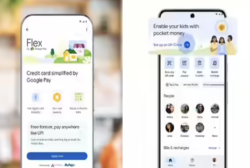
Google Pay FLEX, launched with Axis Bank, is a fully digital RuPay credit card integrated with UPI. It lets users scan UPI QR codes and pay using credit, combining everyday UPI convenience with card-based credit. The card offers instant, rupee-linked rewards redeemable at the point of sale and is designed as an app-native, everyday credit product within Google Pay.
GLO20 December 2025
On December 17, 2025, Google Pay and Axis Bank launched the Google Pay Flex Axis Bank Credit Card—a fully digital, RuPay-network credit card designed to work inside India’s everyday UPI flows. The headline idea is simple: make “pay by UPI QR” feel the same as it does today, but allow eligible users to choose credit as the funding source—while also layering in a loyalty program that can be earned and redeemed at the point of sale.
This launch is significant because it targets a longstanding gap in India’s payments mix. While UPI is ubiquitous for daily spending, consumer credit usage has traditionally been more “card + POS terminal” oriented and often less frictionless than scanning a QR code. Flex attempts to blend these two worlds into a single, app-native experience.

Image: www.timesofindia.com
What exactly is “Flex by Google Pay”?
Flex by Google Pay is Google’s umbrella initiative for an app-integrated, credit-card-like experience designed specifically for India, with Axis Bank as the first issuer partner. Google has also indicated that it intends to expand Flex to additional issuer partners over time.
In its first rollout, Flex is positioned as:
-
Digital-first issuance and management within Google Pay, allowing users to apply for and manage the card entirely in-app
-
RuPay-based, ensuring compatibility with India’s domestic card network and the growing linkage between RuPay credit cards and UPI
-
UPI-powered usage, enabling QR-based payments wherever UPI is accepted, but funded through a credit line
How it works: credit meets UPI QR
1) Apply and get issued digitally
Users can apply for the card directly within the Google Pay app and receive a virtual card experience oriented around everyday spending. The core pitch is speed and reduced friction—no physical paperwork—paired with end-to-end in-app servicing.
2) Link the card to UPI and pay like a normal scan-and-pay
The marquee feature is the ability to link the card to UPI flows. Users can scan merchant QR codes in the familiar UPI manner and select credit as the funding source, subject to card and merchant acceptance.
This builds on broader ecosystem capabilities promoted by NPCI and RuPay, which allow RuPay credit cards to be linked to a UPI ID for UPI-based payments.
3) Spend online and offline, with app-centric controls
Flex is usable across both online and physical merchant contexts. Card controls—such as PIN management, limits, and security settings—are handled directly within the Google Pay experience.
Loyalty, rethought: earning and redeeming rewards at the point of sale
A key differentiator of Flex is how it reimagines rewards in everyday payments.
“Stars” as the core reward unit
Flex uses “Stars” as its rewards currency, with a simple valuation: 1 Star equals ₹1.
Instant, transaction-level redemption
Traditional credit cards typically post rewards in batches and restrict redemption to statements or catalogs. Flex positions rewards as something users can earn during spending and redeem on eligible transactions without waiting for a billing cycle—bringing loyalty directly into the moment of payment.
Why this matters in India’s ecosystem
India’s offline merchant base has conditioned users to expect:
-
QR acceptance almost everywhere, from kirana stores to large retailers
-
Immediate payment confirmation
-
One-tap simplicity
By attaching a rewards mechanism that operates within the same UPI-style checkout flow, Flex aims to make credit not just accessible, but habit-forming in environments where UPI already dominates.
Repayment flexibility and “everyday credit” positioning
Flex is positioned less as a premium lifestyle credit card and more as an everyday transactional credit product. Reported features include:
-
Monitoring bills and spending within the app
-
Flexible repayment options, including the ability to convert certain spends into installments, depending on eligibility
-
Security controls such as blocking the card or resetting the PIN
Exact terms, eligibility criteria, interest rates, and fees vary by user and are governed by Axis Bank’s card terms and disclosures presented during the application process.
The rails underneath: RuPay + NPCI’s “credit on UPI” evolution
Flex arrives within a regulatory and network environment that has been steadily evolving toward credit overlays on UPI. RuPay credit cards can now be linked to UPI IDs, enabling UPI payments backed by credit card accounts.
Earlier ecosystem guidance emphasized transaction limits and the importance of ensuring UPI acceptance remains compatible with card-based credit funding, subject to network rules and merchant enablement.
This context explains the product’s “secret sauce”: it is not merely a new credit card, but a packaging of existing domestic rails into an app-native experience designed for QR-first commerce.
What changes for merchants and consumers?
For consumers
Upside
-
Access to credit in the same interface already used for daily UPI payments
-
A rewards loop that is simpler, rupee-denominated, and more immediate
Watch-outs
-
As with any credit product, costs depend on repayment behavior, interest rates, and issuer terms. A UPI-like user experience does not eliminate traditional credit card economics.
For merchants and the ecosystem
Merchants may see more customers choosing credit for routine QR payments, potentially increasing average ticket sizes and reinforcing preference for apps that bundle payments with rewards. Merchant enablement and fee structures will continue to influence how and where credit-on-UPI is promoted, even as standard UPI payments remain free for users.
Competitive context: why Google, and why now?
The launch is widely viewed as Google stepping deeper into monetizable financial services in India by combining its distribution strength through Google Pay with a regulated banking partner and domestic payment rails. It also arrives amid broader experimentation across the industry with credit-on-UPI models, where Google’s advantage lies in deep integration with a high-frequency payments app.
If Flex expands to additional issuers, the long-term opportunity may be less about a single card and more about establishing a platform pattern for everyday credit embedded within UPI behaviors.
Global Loyalty Organisation Take:
Google Pay Flex + Axis Bank can be best understood as a product that:
-
Turns UPI’s QR payment habit into a credit habit (where permitted), and
-
Repackages loyalty so rewards can be earned and redeemed closer to the moment of purchase—especially in offline India, where QR is the default checkout interface.
If it scales successfully, Flex could push India’s payments ecosystem toward a tighter blend of real-time QR payments, regulated revolving credit, and instant, app-native rewards, without requiring users to change how they pay day to day.
Source: GLO
Disclaimer: Press release
© Press Release 2025
Send us your press releases to news@globalloyalty.org
Press releases originate from external third-party providers. This website does not have responsibility or control over its content, which is presented as is, without any alterations. Neither this website nor its affiliates guarantee the accuracy of the views or opinions expressed in the press release.
The press release is intended solely for informational purposes and does not offer tax, legal, or investment advice, nor does it express any opinion regarding the suitability, value, or profitability of specific securities, portfolios, or investment strategies. Neither this website nor its affiliates are liable for any errors or inaccuracies in the content, nor for any actions taken based on it. By using the information provided in this article, you agree to do so at your own risk.
To the maximum extent permitted by applicable law, this website, its parent company, subsidiaries, affiliates, shareholders, directors, officers, employees, agents, advertisers, content providers, and licensors shall not be liable to you for any direct, indirect, consequential, special, incidental, punitive, or exemplary damages, including but not limited to lost profits, savings, and revenues, whether in negligence, tort, contract, or any other theory of liability, even if the possibility of such damages was known or foreseeable.
The images used in press releases and articles provided by 3rd party sources belong to the respective source provider and are used for illustrative purposes in accordance with the original press releases and publications.
Disclaimer: Content
While we strive to maintain accurate and up-to-date content, Global Loyalty Organisation Ltd. makes no representations or warranties of any kind, express or implied, about the correctness accuracy, completeness, adequacy, or reliability of the information or the results derived from its use, not that the content will meet your requirements or expectations. The content is provided “as is” and “as available”. You agree that your use of the content is at your own risk. Global Loyalty Organisation Ltd. disclaims all warranties related to the content, including implied warranties of merchantability, fitness for a particular purpose, non-infringement, and title, and is not liable for a particular purpose, non-infringement, and title, and is not liable for any interruptions. Some jurisdictions do not allow the exclusion of certain warranties, so these jurisdictions may not apply to you. Global Loyalty Organisation Ltd. Reserves the right to modify, interrupt, or discontinue the content without notice and is not liable for doing so.
Global Loyalty Organisation Ltd. shall not be liable for any damages, including special, indirect, consequential, or incidental damages, or damages for lost profits, revenue, or use, arising out of or related to the content, whether in contract, negligence, tort, statute, equity, law, or otherwise, even if advised of such damages. Some jurisdictions do not allow limitations on liability for incidental or consequential damages, so this limitation may not apply to you. These disclaimers and limitations apply to Global Loyalty Organisation Ltd. and its parent, affiliates, related companies, contractors, sponsors, and their respective directors, officers, members, employees, agents, content providers, licensors, and advisors.
The content and its compilation, created by Global Loyalty Organisation Ltd, are the property of Global Loyalty Organisation Ltd. and cannot be reproduced without prior written permission.
