
Ad-Panel
Join GLO today for largest global network of loyalty & CX professionals and latest loyalty research & analysis.
Home » Articles » Dynamic Yield by Mastercard report: The State of Personalization Maturity in Grocery/CPG – 2024

Dynamic Yield by Mastercard report: The State of Personalization Maturity in Grocery/CPG – 2024

by GLO
0 comments

These days, 76.5% of grocery customers expect a tailored digital shopping experience and are frustrated when they don’t get it. With analysts expecting grocery e-commerce penetration to double in the next five years, from 11% to 23%, many brands in the industry are already turning to personalization to meet consumer demand, improve margins, increase basket sizes, and cultivate loyalty.

Mastercard

(Image Source)

Mastercard

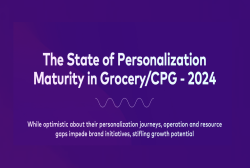
Dynamic Yield by Mastercard relased its  2024The State of Personalization Maturity in Grocery/CPG report. 

Read full report here

Key findings: 

  • While grocery/CPG brands recognize the potential of their personalization program, they have yet to make the necessary investments in culture or the evolution of previous practices and mindsets.
  • The industry incorporates diverse expertise, but many brands need more primary business resources wholly devoted to personalization/testing and learning, hindering synchronization in executing personalized strategies across departments and digital channels.
  • Organizations have collected valuable data, yet effectively implementing a scalable personalization framework remains challenging. Many struggle with comprehensive testing, limited data utilization, and inadequate communication of testing outcomes.
  • While many companies recognize the importance of audience strategy and established KPIs, reliance on anecdotal decision-making and short-term wins often hamper developing a clear picture of audience needs for competitive advantage.

Executive summary: 

These days, 76.5% of grocery customers expect a tailored digital shopping experience and are frustrated when they don’t get it.

With analysts expecting grocery e-commerce penetration to double in the next five years, from 11% to 23%, many brands in the industry are already turning to personalization to meet consumer demand, improve margins, increase basket sizes, and cultivate loyalty.

But while brands are optimistic about personalization, implementation and program maturity are not a one-size-fits-all journey.

Dynamic Yield by Mastercard conducted its maturity survey across grocery/CPG brands in 12 countries within four global regions (America, Europe & United Arab Emirates, Asia Pacific, and South America) to better understand the current challenges and opportunities of personalization in the industry.

The research includes 100 responses from personalization stakeholders in the C-Suite and Senior and Middle Management, covering Marketing, Business Development, and Growth functions.

The 4 Signals of Personalization Maturity

Based on criteria such as internal commitment to personalization, allocation of resources, process implementation, utilization of data, testing methodology, audience strategy, and more, we identified 4 signals to help measure a company’s personalization maturity. Companies are then bucketed into 4 levels of maturity: Absent, Basic, Advanced, and Pioneer.

Signal 1 – CultureThe organization understands the value and business impact of personalization

A strong culture of personalization is evidenced by it being made a top priority, with clear, quantitative business goals and KPIs that are used to inform a testing program and strategy. Those that will benefit most put personalization at the core of their customer journey efforts and have full organizational alignment.

Signal 2 – ResourcesThe right resources and talent are made available to execute on personalization

Leadership appoints the right business, technical, and creative talent to drive personalization orchestration among other departmental programs or activities, which can be achieved in a timely, coordinated, and cohesive fashion across key digital channels.

Signal 3 – ProcessesProcesses exist to streamline key program activities and facilitate proper campaign execution

The benefits of personalization cannot be realized by simply acquiring the right technology or set of capabilities. Mature brands have processes around data identification and activation, know how to derive insights from and distribute test results, and have free rein to conduct cross-site testing – paving the way to their success.

Signal 4 – EffectivenessThe organization is aligned on the who, how, and why of its personalization program

A strong personalization strategy requires alignment on the business’ key audiences. Not even the right resources will be enough to generate results without a data-driven approach and KPIs that measure efforts for shaping the future roadmap. That means following the data rather than anecdotal instinct or executive mandates for program prioritization.

Source: Mastercard 

Leave a Comment

Global Loyalty Organisation
Privacy Overview

This website uses cookies so that we can provide you with the best user experience possible. Cookie information is stored in your browser and performs functions such as recognising you when you return to our website and helping our team to understand which sections of the website you find most interesting and useful.