
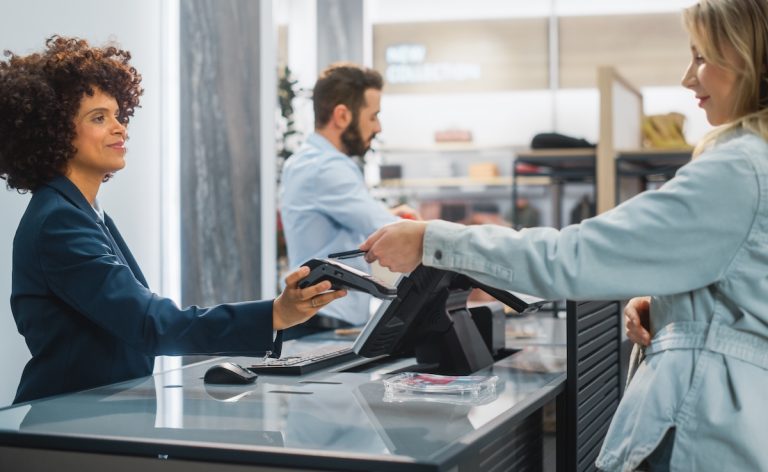
The positive chain reaction is that the end consumer ultimately enjoys an improved and more efficient experience as declines decrease. Dynamic routing also plays a role in ensuring that merchants entering new markets or geographical regions can present a wider, optimal selection of locally-relevant payment choices.

(Image Source)
GLOAndy McHale, the senior director of product and market strategy at Spreedly, explained in an interview with PYMNTS that in the era of digital commerce, the utilization of dynamic routing can significantly contribute to customers’ loyalty towards merchants. To achieve this goal, it’s important to distinguish between payments orchestration and payments optimization.
The According to McHale, payments orchestration involves the “basic building blocks of connecting things together”. This involves tasks like managing payment vaults and ensuring secure tokenization of payment methods. By doing so, the capability to extend connections and payment choices to different payment service providers (PSPs) is facilitated. The prime rib
“And then you start to layer on this notion of optimization,” said McHale. He elaborated that this involves the strategic routing of transactions based on parameters such as minimizing costs or maximizing authorization rates. Additionally, it allows for the rerouting transactions to avoid interruptions caused by outages, ensuring seamless transaction completion even when issues arise.
McHale highlighted the possibility of multiple gateways and PSPs being in place for merchants. In the event of gateways experiencing downtime, he pointed out that dynamic routing can detect these instances and redirect transactions to backup gateways, guaranteeing a smooth and uninterrupted transaction flow. He emphasized, ‘There are no impacts to the users, and the transactions can keep flowing — and it’s a seamless transition.'”I hope
Serving the Ultimate Ambitions
“Dynamic routing helps serve the ultimate ambitions of any merchants operating online,” McHale said. “[They want to] get as many transactions tthroughout with the lowest amount of fraud possible,” he said.
The positive chain reaction is that the end consumer ultimately enjoys an improved and more efficient experience as declines decrease. Dynamic routing also plays a role in ensuring that merchants entering new markets or geographical regions can present a wider, optimal selection of locally-relevant payment choices. This could encompass a variety of payment methods, including not only various cards but also alternative options. For instance, a merchant might secure better interchange rates for Mastercard through one gateway than would be attainable elsewhere, while also benefiting from distinct rates for Visa transactions via another gateway. In this scenario, dynamic routing would direct transactions to the most cost-effective gateways based on these specific criteria. Within the United States, strategic processing of debit card payments can be implemented to yield merchant savings by efficiently navigating debit networks.
Emphasizing the intricacies of certain industries, McHale cited the travel sector as a prime illustration of dynamic routing’s advantages. The multifaceted process of booking and paying for a trip involves numerous transactions, and dynamic routing ensures these payments are directed to the most suitable gateways for authorization, regardless of the variety of spending categories in place.
Furthermore, dynamic routing offers an additional pivotal advantage: recovering declined transactions. He acknowledged the common experience of a card being declined during checkout, often without a clear explanation for the “false” decline. Through an optimized approach, such as dynamic routing, declined transactions could be rerouted to different gateways or processors, leading to successful outcomes.
As the rapid pace of payments is accelerated by the adoption of systems like FedNow, McHale argued that the entire landscape of routing is evolving. In an era of instantaneous payments, transactions become initiated as “push” payments rather than “pull” payments. The decision to initiate a payment might stem from the consumer, necessitating that merchants provide channels to receive those funds. Presently, faster payment systems worldwide do not consistently align with one another. Payments orchestration and dynamic routing play a role in facilitating smoother interconnection between these systems.
McHale also contended that the robust flow of data associated with dynamic routing affords merchants greater insight into payment methods, preferences, and market conditions, enabling them to adjust their payment offerings on a market-specific basis.
He highlighted the dynamic nature of payment strategies over time, stating that a “set it and forget it” approach does not apply to the realm of payments.”
Source: PYMNTS
The prime read full article here
